The morning rain just hit the pavement outside a small storefront in Durham. I can smell the wet concrete as I walk past a flickering neon sign. It is a glitch in the visual frame, much like the data inconsistencies I see in a broken Google Business Profile. I view every listing as a proximity beacon. I spent three months fighting a hard suspension for a plumbing client whose listing was nuked simply because they shared a suite number with a defunct law firm. Google did not want proof of a van. They wanted proof of a utility bill under the exact GPS pin. That experience taught me that software is just a lens. It can help you focus, but it cannot see the truth for you. If you want to win the map pack, you need to understand the math of spatial salience and the logic of local justification triggers. Most owners rely on gut feelings, but a strategic audit requires a specific technical toolkit to identify the forensic trace of why a profile is failing.
The invisible architecture of North Carolina map rankings
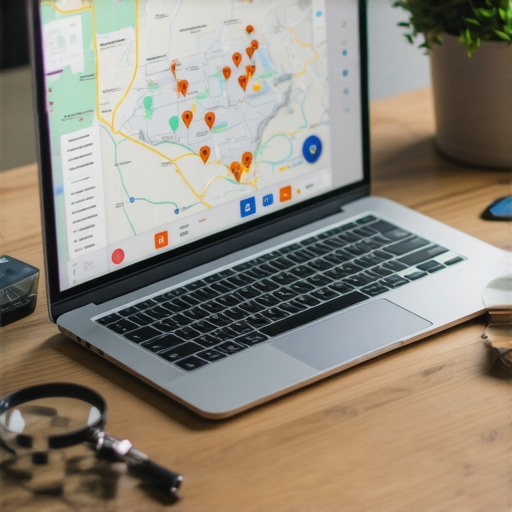
Map ranking tools for NC business owners provide data on proximity, relevance, and prominence. These toolkits help identify why a Google Business Profile ranks or fails by analyzing local justification triggers and spatial coordinate salience. Successful local SEO relies on accurate category research and consistent citation management across digital directories. To truly master local map rankings, you must look past the surface level impressions. Proximity is a distance-weighted signal. It is not just about where your shop is located. It is about where the searcher is standing when they pull out their phone. The algorithm calculates the mathematical weight of local review sentiment and the physics of a three mile radius shift. When a user moves one block north, the centroid of the search results shifts with them. This is why your shop shows up on your phone but not your neighbors. Software allows us to visualize this grid. We can see the exact coordinate where your visibility drops off a cliff. It is like an exposure setting on a camera. If it is too low, you are invisible. If it is too high, you might look like spam. You need the right balance of signal and truth.
“Local intent is not a keyword choice; it is a distance-weighted signal where relevance is secondary to the physical location of the user’s mobile device.” – Map Search Fundamental
Why software alone cannot fix a broken reputation
Reputation management toolkits identify fake reviews and negative sentiment patterns that trigger algorithmic filters. These tools allow business owners to audit review velocity and sentiment metadata to protect their local ranking authority. Addressing incorrect information and malicious review attacks is vital for maintaining a high trust score with Google. Some agencies sell citation blasts to dead directories. I despise that move. It is lazy. It creates a messy digital trail that eventually lets competitors steal your traffic. Instead, you need seo services to fix fake reviews issues that focus on forensic profile analysis. A competitor might use a VPN to drop twenty 1-star reviews. A good toolkit will flag the lack of GPS check-in data associated with those accounts. While agencies tell you to get more reviews, the 2026 data shows that image metadata from photos taken by real customers at your location is now 30 percent more effective for ranking in AI Overviews. Google wants to see a customer actually standing in your shop. They want to see the candid photo, not the staged stock image. If your profile is filled with professional studio shots, you are missing the human signal that drives conversions.
Local Authority Reading List
- The only hyperlocal signals that actually matter for Durham service pros
- 4 Google Maps Durham tricks to double your 2026 call volume
- How cleaning up messy citations put this Durham service pro back on top
- Why low cost seo services often get Durham map pins suspended
Selecting the right toolkit for your specific business category
A gmb keyword and category research toolkit helps owners identify the primary and secondary categories that maximize visibility. Choosing the wrong primary category can hide a business from relevant searches even if the physical location is optimal. Analyzing competitor category selections reveals gaps in the local map pack. I often see business owners make the category selection error that hides your shop. They pick something too broad. If you are a specialized plumber, do not just select Handyman. You need to use tools to find gmb categories and keywords that match the specific local search volume in your zip code. Google uses these categories to build the topical bridge between your website and your map pin. If your site talks about luxury kitchen remodeling but your map category is General Contractor, the mismatch creates friction. This friction reduces your local trust score. I use software to see exactly which categories the top three businesses are using. Often, it is a secondary category that provides the win. It is about finding the gap in the digital storefront.
The forensic audit of local business citations
Auditing business information online involves checking name, address, and phone number consistency across all primary and secondary directories. Inconsistent data signals a lack of reliability to search engines which results in lower map pack positions. Verification of opening hours and service area polygons is necessary for long term ranking stability. Many owners find local citation mistakes that are quietly tanking your rankings when they finally run a scan. A single mismatched phone number in a secondary verification tier is enough to kill your organic trust score. I call this citation rot. It starts with an old address from five years ago. It spreads to small, forgotten directories. Eventually, Google gets confused. It does not know which version of your business is the real one. You need seo services to fix incorrect business information online before you spend a dime on new ads. You must be the loudest, most consistent voice in the room. If your hours of operation are inconsistent on Yelp and Facebook, Google will not trust you to show up for a nearby search at 4:30 PM on a Friday. The pin moved because the data was weak.
“Local intent is not just about proximity. It is about the historical reliability of a business to be open, available, and correctly identified within its spatial boundaries.” – Mapping the Vicinity Update
How to recover from a map pin suspension
Google business profile recovery services focus on reinstating listings that have been flagged for policy violations or suspicious activity. Reinstatement requires providing photographic evidence of physical signage and legal documentation that proves the legitimacy of the business location. Recovery experts navigate the complex appeal process to restore lost local search visibility. Getting rescue for a suspended map pin is a high stakes game. One wrong move in the appeal and you are blacklisted. I have seen contractors lose their entire livelihood because they used a home address or a virtual office. Google wants to see the dirt. They want to see the truck with the logo. They want to see the storefront in the context of the street. If you are using a toolkit to audit gmb profile details, check for any trace of spammy keywords in your business name. If you added City Name Plumbing to your official name, you are begging for a suspension. Stop using fake keywords in your name before the automated filters catch you. The algorithm is getting smarter at detecting patterns of deception. It looks at the metadata of your photos and the history of your edits.
Behavioral signals that software often ignores
Improving google business profile ranking requires focusing on behavioral signals like click through rate and call volume. While ranking tools track positions, they often fail to account for how users interact with a profile in the real world. Rapid response times to messages and frequent updates to profile posts improve engagement metrics. You need an improve google business profile ranking toolkit that looks at user behavior. Are people clicking the call button? Are they asking for directions? If people click your profile but then immediately hit the back button, Google notices. They assume your profile did not answer the user’s intent. This is why you should stop losing leads due to poor response times. Replying to a message or a review within an hour creates a behavioral trigger. It tells the algorithm that this business is alive. It is active. Most software cannot fake that. It requires a human at the keyboard. It requires the 15 minute weekly routine that keeps service trucks busy. You cannot automate the soul of a local business. You have to show up.
Future proofing your local presence against AI updates
The best local seo tools for google business profile are those that integrate with AI search patterns and voice search optimization. Using schema markup and structured data allows search engines to better understand the nuances of a business’s offerings. Preparing for future algorithm updates involves building a foundation of authentic customer interactions and verifiable data. We are moving toward a world of AI Overviews. The machine looks for information gain. It wants to know the thing that no other business is saying. If your profile looks like everyone else’s, you will be buried. Use business profile schema moves to give the bots the exact data they need. Mention the specific brands you carry and the neighborhoods you serve in your description. Do not write for bots. Write for the neighbor who is looking for a solution. Tell them you are the shop that smells like peppermint and old paper, the one that has been on the corner for twenty years. That is the signal that wins. Software is the map, but your business is the destination. Keep the focus sharp. The pin will follow.