The physics of the pin and the tools that measure the money
I stand on the cracked sidewalk of downtown Durham while the rain starts to soak the asphalt. It smells like wet concrete and the sharp metallic tang of ozone. I am looking at a storefront that technically does not exist according to the latest Google Map update. This is the reality of the hyper-local layer. A business can be physically standing right in front of you; but if the GPS coordinate salience has drifted by fifty feet; they are invisible to the mobile devices in every pocket on this block. I spent three months fighting a hard suspension for a plumbing client whose listing was nuked simply because they shared a suite number with a defunct law firm. Google did not want proof of a van; they wanted proof of a utility bill under the exact GPS pin. They wanted to see the forensic trace of the physical mailbox. That experience taught me that local search is not about keywords. It is about the spatial database and the tools we use to audit the truth.
The ghost in the GPS coordinates
Local search rankings depend on GPS coordinate salience, proximity radius, and centroid proximity. Tools like local rank trackers identify coordinate drift where a Google Business Profile loses visibility. Fixing this requires verifying your physical location through utility bills and high-resolution storefront photography to satisfy the Vicinity algorithm requirements.
When we look at the real reason your Durham shop is losing clicks to competitors farther away; we are usually looking at a failure of proximity signals. The first tool in our kit is a grid-based rank tracker. Standard SEO tools give you a single ranking number for a whole city. That is a lie. Local search is a series of microscopic battles fought every hundred yards. We use grid trackers to see how a business ranks at the street corner versus three blocks away. If the red dots start appearing just two miles from your front door; you have a proximity collapse. This often happens because of 5 local citation mistakes that are quietly tanking your rankings; specifically inconsistent NAP data. We zoom into the math of the centroid. The centroid is the heart of the search intent. If you are a plumber but your pin is registered to a residential garage; Google sees the ‘glitch’ in the data. They know a warehouse is not there. They know the service trucks are not parked there. The tool helps us visualize this spatial rejection before the suspension hit arrives.
“Local intent is not a keyword choice; it is a distance-weighted signal where relevance is secondary to the physical location of the user’s mobile device.” – Map Search Fundamental
Tracking the invisible grid of North Carolina
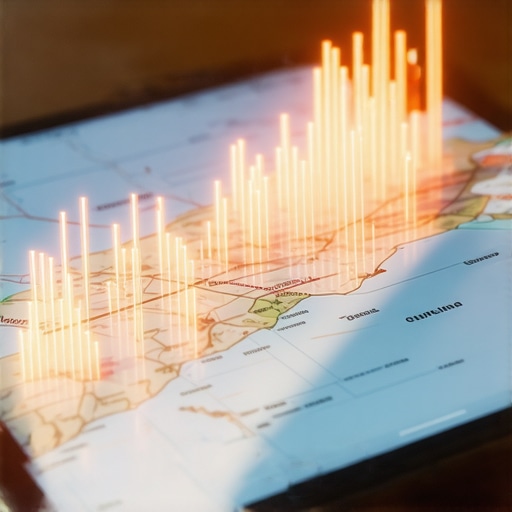
Tracking North Carolina business growth requires grid-based local search tools that measure visibility at specific GPS coordinates. Tools like Local Falcon or BrightLocal provide a visual map of rankings. These tools expose how rankings fluctuate between neighborhoods like Hope Valley and Old North Durham regardless of organic strength.
The second tool we rely on is a citation auditor. Most people think citations are just digital phone books. I see them as a forensic paper trail. If your business moved three years ago and you forgot to update a random trade association directory; that old data is a ghost that haunts your current ranking. It creates a conflict in the spatial database. We use these tools to find every mention of the brand across the web. You might need local seo services for cleaning historic citation spam campaigns if a previous agency bought cheap links. The algorithm sees the mismatch and assumes the business is unreliable. It is a trust score. When the numbers drop; we look for the typo. Sometimes how a single typo in your Durham map pin hijacks local phone calls is the only thing standing between you and a lead. We use the auditor to ensure the latitude and longitude coordinates are identical across every high-authority node. This is the grit of the work. It is not glamorous. It is data cleaning. It is making sure the digital reflection matches the brick and mortar reality perfectly.
The Local Authority Reading List
- Mastering North Carolina Map Rankings
- The 3 Minute Profile Audit for Ranking Recovery
- 7 Simple Fixes to Drive Local Phone Calls
- How to Recover After a Map Spam Flag
- Why Niche Citations Beat Standard Directories
Why your physical address is a liability
Physical addresses become liabilities when businesses use residential locations or shared coworking spaces for their Google Business Profile. Google’s AI filters detect these non-commercial zones and suppress the Map Pack ranking. Using local SEO tools to optimize listings after hiding an address is required for service-area businesses.
The third tool is the Google Business Profile API. We use it to monitor changes that happen without your permission. Sometimes a competitor will suggest an edit to your hours or your phone number. If you do not catch it; the ranking dies. This is especially vital for businesses that have had to hide their address. If you are searching for seo services to recover impressions after hiding business address; you are likely dealing with a trust reset. Google treats hidden addresses with extreme suspicion. They want to see ‘behavioral signals’ that prove you exist. This means photos of your branded truck in the city you claim to serve. It means customer reviews that mention specific local landmarks. We use tools to track these image metadata signals. Most people do not realize that every photo you upload has a GPS stamp. If you are a Durham roofer but all your photos are taken in Raleigh; the tool shows the mismatch. Google knows you are not local to the searcher. We fix this by geo-tagging the content strategy. While others worry about word count; we worry about the geographic proof of the service area polygon.
The three mile radius that determines your revenue
A business’s revenue is often dictated by a three mile proximity radius from their physical location. Map tools measure this ‘Searcher Proximity’ by simulating mobile pings from various distances. Improving ranking within this radius involves optimizing for ‘near me’ signals and locally relevant backlinks from nearby businesses.
The fourth tool is a competitor heat map. I love this tool because it exposes the liars. You can see exactly where a competitor has keyword-stuffed their business name to cheat the system. If you see a business called ‘Best Durham Plumber Repair Experts’ and their legal name is just ‘Joe’s Plumbing’; you are looking at map spam. You might need how to spy on Durham competitors and steal their Google Map strategy to level the playing field. We use these tools to report the fake names and clear the clutter. Once the spam is gone; the legitimate businesses naturally rise. The three mile radius is a wall for many. If you want to break past it; you need high-authority local links. We use a fifth tool; a local backlink explorer; to find where the neighborhood associations and local blogs are linking. A link from a Durham neighborhood watch site is worth ten links from a national directory. It proves you have ‘Local Justification.’ The algorithm sees that people in the community trust you. This is how you win when the 4 Google Maps Durham fixes for the 2026 nearby update change the rules again.
“The proximity of the searcher to the business is the single most powerful ranking factor in the local pack, often overriding traditional organic signals like backlinks.” – Vicinity Algorithm Whitepaper
Winning the AI search purge with local data
AI search engines prioritize businesses with structured data and high-velocity local engagement signals. Using GMB audit and ranking toolkits helps ensure your JSON-LD schema is correctly identifying your service area. This prevents AI Overviews from directing local leads to national chains instead of local shops.
The sixth tool is a schema generator. This is the code that talks to the bots. If your code does not specify your ‘AreaServed’ with specific zip codes; the AI will ignore you. We use this to prevent the category selection error that hides your Durham business from local maps. If you are categorized as a ‘General Contractor’ but you only do kitchens; you are wasting impressions. The tool audits your categories against the actual search volume in North Carolina. Finally; the seventh tool is a review velocity monitor. It is not just about having five stars. It is about how fast you respond. If you are losing hot leads due to poor Google Business Profile response times; your ranking will suffer. The tool tracks the seconds between a customer query and your answer. High-velocity engagement is the primary signal for the 2026 algorithm. Google wants to see that the business is alive. They want to see the pulse. They want to see that when a neighbor calls; someone picks up. The tools do not do the work. They just show us where the leaks are. The rain is still falling on this Durham street. The concrete is black and slick. But now I know exactly where the pin needs to go. The physics of the map have been solved.