Why Most NC Contractors Get Ghosted on Google Maps Even With 5-Star Reviews
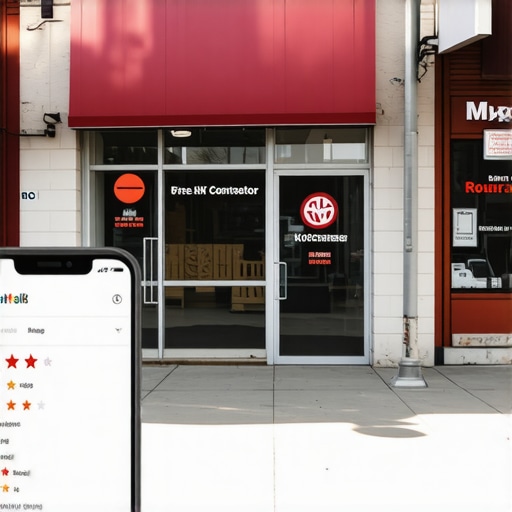
You’ve done everything right. You’ve built a solid plumbing, roofing, or HVAC business here in Durham. You’ve spent years providing top-tier service, and your Google Business Profile (GBP) proves it. You have 50, 75, maybe even 100 five-star reviews. You’ve earned that gold-star reputation. But then you look at the Google Map Pack for “emergency plumber Durham” or “roofing contractor near me,” and your business is nowhere to be found. Instead, you see a competitor with a 4.2 rating and only 12 reviews sitting comfortably in the top spot, taking all the phone calls.
It feels like a betrayal. You’ve been told for years that “reviews are king,” yet you’re being ghosted by the very platform that is supposed to reward quality. This is the “5-Star Ghosting” phenomenon, and it is the single biggest source of frustration for North Carolina home service pros today. While reviews are a critical ranking factor, they are far from the only factor. In fact, relying solely on reviews is a recipe for invisibility in a hyper-competitive local market.
If you’ve ever wondered why your Durham neighbors can’t find your shop on their phones, you aren’t alone. The reality is that Google’s algorithm has evolved. It no longer just asks, “Who is the best?” It asks, “Who is the most relevant, the closest, and the most responsive right now?” Understanding local business marketing in NC requires moving beyond the “more reviews” mindset and diving into the technical and geographical nuances of the Map Pack.
Section 1: The Proximity Paradox, Why You’re Invisible 3 Blocks Away
One of the most jarring realizations for a contractor is discovering that their ranking changes based on where they are standing. You might be sitting in your office in Downtown Durham, search for your services, and see yourself at #1. But if you drive ten minutes toward Southpoint or over to Chapel Hill, you vanish from the results entirely. This is the Proximity Paradox.
Proximity is currently the #1 ranking factor in the local algorithm. Google’s “Nearby” update significantly tightened the radius for local searches. Google’s primary goal is to provide the most convenient solution for the user. If a homeowner in Hope Valley searches for “HVAC repair,” Google is going to prioritize the technician who is physically closest to that neighborhood at that moment, or whose verified business address is in that immediate vicinity.
This is why your North Carolina map pin only shows up when you are standing in the shop. For many contractors, this feels unfair. You serve the entire Triangle area, so why does Google treat you like a neighborhood convenience store? The answer lies in how you’ve optimized your service areas and how Google perceives your “authority” across different zip codes. If you haven’t invested in a professional google maps ranking service, your reach will naturally be limited to a small circle around your physical office.
To break out of this proximity trap, you cannot simply wait for more reviews. You need to signal to Google that your business is active and relevant in the surrounding neighborhoods. This involves geo-tagged photos from job sites, localized service pages on your website, and consistent activity within the areas you want to rank. Google calculates the distance between the searcher and the business with surgical precision; if you haven’t built “location authority,” the algorithm will always default to the closest pin, regardless of how many stars you have.
Section 2: Relevance vs. Prominence, The Missing Keywords
In the world of google business profile seo, there are three pillars: Proximity, Prominence, and Relevance. Your 5-star reviews contribute to Prominence. They tell Google you are a well-known and well-liked business. However, prominence without Relevance is useless.
Relevance is how well your business profile matches what the user is actually typing into the search bar. We often see Durham contractors make the mistake of choosing one primary category (like “General Contractor”) and ignoring the dozens of sub-categories that actually drive leads (like “Kitchen Remodeler,” “Bathroom Remodeler,” or “Deck Builder”). This is the category selection error that hides your Durham business from local maps.
According to research from BrightLocal, “Exact match business name” remains a massive ranking advantage, though it’s a risky game. If your business is “Durham Roofing Pros” and someone searches “Durham Roofing,” you have a natural relevance advantage. However, many contractors try to “keyword stuff” their business name (e.g., “Best Durham Roofing Repair & Siding Experts”), which can lead to immediate profile suspension. Instead of cheating the system, you need to focus on google business profile optimization that builds relevance through your service descriptions, your Q&A section, and your Google Posts.
If your profile doesn’t explicitly mention “tankless water heater installation,” Google isn’t going to guess that you do it, no matter how many 5-star reviews mention your “great service.” You must be literal. Google’s AI reads your reviews, but it prioritizes the attributes and services you have officially selected in your dashboard. If you are missing key categories, you are effectively invisible to specific high-intent searches.
Section 3: The “Ghost” Profile, Technical Killers of Local Rank
Sometimes, a contractor has a great profile and great reviews, but they are being held back by “technical debt.” This is the “Ghost Profile” – a GBP that looks good on the surface but is built on a shaky foundation of inconsistent data. The most common killer here is NAP (Name, Address, Phone) inconsistency.
Google crawls the entire web to verify that your business is legitimate. If your name is “Raleigh-Durham HVAC Specialists” on your Google Profile, but “R-D HVAC” on a local chamber of commerce site, and “Raleigh Durham HVAC Specialists LLC” on a random directory, Google’s confidence in your data drops. Why inconsistent business names on small directories kill your Durham map rank is simple: it creates “data friction.” Google doesn’t want to risk sending a user to a business with an unverified address or a disconnected phone number.
Furthermore, your website’s performance directly impacts your Map Pack ranking. If your site is slow, not mobile-friendly, or lacks local schema markup, your GBP will suffer. Google views your website as the “brain” of your local presence. If the brain is sluggish, the “face” (your map listing) won’t show up. Many contractors try to use generic local seo software to fix this, but automated tools often miss the nuanced local citations that matter in the North Carolina market.
Another technical killer is the Service Area Business (SAB) setting. Many contractors work out of their homes and hide their addresses. While this is allowed, research from the GoogleMyBusiness community suggests that hidden addresses often face an uphill battle against businesses with verified physical storefronts. If you are an SAB, you must be twice as diligent about your technical SEO to maintain parity with brick-and-mortar competitors.
Section 4: 2026 Updates, Interaction Speed & Verified Merchant Tags
As we look toward 2026, the local SEO landscape is shifting again. Google is moving away from static signals (like how many reviews you have) toward behavioral signals (how you interact with customers). The future of ranking isn’t just about what you’ve done in the past; it’s about how you respond in the present.
One of the biggest emerging factors is “Interaction Speed.” Google can now track how quickly you respond to messages through the GBP interface and how fast you reply to new reviews. Why 2026 Durham SEO now depends on local interaction speed is a reflection of user expectations. If a homeowner has a burst pipe, they don’t care about a review from three years ago; they care about the contractor who replies to their message in 90 seconds.
We are also seeing the rise of the “Verified Merchant” and “Google Guaranteed” tags. These are no longer just optional badges; they are becoming filters. In the near future, users will be able to toggle a switch that says “Show only verified contractors.” If you haven’t gone through the verification process, you won’t even appear in the search results, regardless of your 5-star status. To stay ahead, contractors need to use advanced local seo tools that monitor these behavioral metrics and ensure they are meeting Google’s new speed standards.
Additionally, Google’s AI is getting better at detecting “Review Velocity.” If you get 20 reviews in one week and then zero for three months, it looks suspicious. Google prioritizes fresh reviews. According to Tenaya360, “A lack of fresh reviews can make you invisible or look unreliable.” A steady stream of one review per week is significantly more powerful than a massive dump of reviews once a year. The algorithm wants to see that you are consistently active in the Durham community right now.
Section 5: The Actionable NC Contractor Checklist
If you’re tired of being ghosted by Google, it’s time to stop chasing stars and start optimizing for the algorithm. Use this simple Durham local SEO checklist for service pros who hate tech to audit your presence today:
- Audit Your Categories: Ensure your primary category is your most profitable service, and add at least 5-8 relevant secondary categories.
- Clean Up Your Citations: Use a tool to find every mention of your business online. Ensure the Name, Address, and Phone number are identical across the board.
- Refresh Your Visuals: Upload new photos weekly. Specifically, focus on the 4 specific photos that actually drive map clicks: your branded truck, your team in uniform, a “before and after” shot, and a photo of your physical office or a local landmark.
- Implement “Text-to-Call”: Enable the messaging feature on your GBP and ensure someone is designated to reply within 5 minutes.
- Geotag Your Activity: When you post updates to your Google Business Profile, mention specific Durham neighborhoods like Woodcroft, Old North Durham, or Trinity Park.
- Monitor Your Rank: Use a gmb ranking service to track your position across different zip codes, not just from your office chair.
By following these steps, you move from being a “passive” business with good reviews to an “active” business that Google feels confident recommending to its users. The Map Pack is a meritocracy, but the metrics of merit have changed. It’s no longer just about being “good”; it’s about being “present.”
Conclusion: Stars are the Start, Not the Finish Line
Having 5-star reviews is a massive achievement, and you should be proud of the reputation you’ve built in North Carolina. But in the eyes of Google Maps, those stars are just the entry fee. They get you into the conversation, but they don’t win you the job. To stop being ghosted, you must master the trifecta of Proximity, Relevance, and Prominence.
The contractors who will dominate the Durham market in 2026 are those who understand that SEO is a living, breathing process. It requires technical precision, rapid response times, and a deep connection to the local geography. Don’t let your hard-earned reputation go to waste because of a hidden technical error or a missing category. Take control of your local presence, use the right rank google business profile strategies, and make sure that when a neighbor needs help, your name is the first one they see.
Ready to stop guessing and start ranking? Whether you need a full audit or advanced google maps seo tools, the time to act is now. The leads are out there – make sure they’re calling you.
Contact Durham Local SEO today for a professional Map Pack Audit.