Why Your Shop Shows Up on Your Phone But Not Your Neighbor’s
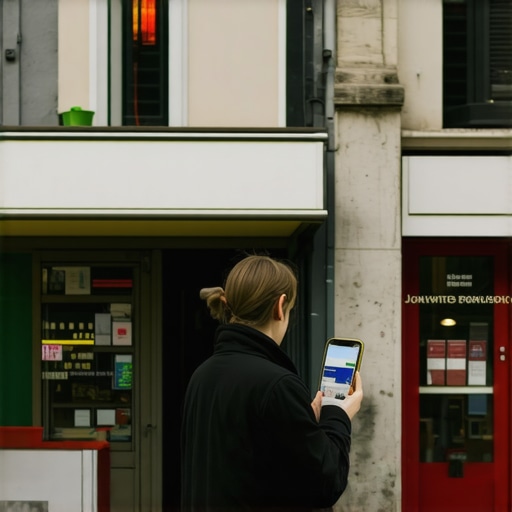
You’re sitting at your desk in your shop right here in Durham. You pull out your phone, open Google Maps, and search for your primary service. There you are – Number One in the Local Map Pack. You feel a surge of pride. Your google business profile seo efforts seem to be paying off. But then, you head home to the other side of town, or perhaps a neighbor mentions they couldn’t find you when they were searching from their living room just three blocks away. You check again, and suddenly, your business is nowhere to be found. You’ve vanished.
This is what I call the “Proximity Paradox,” and it is the single most common frustration I hear from small business owners in North Carolina. As a Google Business Profile Product Expert, I see this daily. Business owners assume that if they are “online,” they are visible to everyone. The reality is far more localized – and far more complex.
Data shows that over 30% of all mobile search results are now directly related to map listings. Google isn’t just looking for the “best” business; it is looking for the best business near the searcher at that exact second. Google recalculates results for every searcher based on their precise GPS coordinates. If you want to understand why your North Carolina map pin only shows up when you are standing in the shop, you have to understand how the algorithm defines your “territory.”
The “Big Three” of Local Ranking
To rank google business profile listings effectively, Google relies on a three-legged stool: Relevance, Distance, and Prominence. If any one of these legs is weak, your visibility collapses the moment a searcher steps outside your immediate radius.
1. Relevance
Relevance is how well a local business profile matches what someone is searching for. If you are a plumber but your profile is thin on details about “emergency water heater repair,” you won’t show up for that specific search, regardless of how close you are. This is where google business profile optimization becomes critical. You must tell Google exactly what you do through categories, services, and posts.
2. Distance (Proximity)
This is the “Proximity” factor. Google calculates how far each potential search result is from the location terms used in a search. If a user doesn’t specify a location (like “Durham”), Google calculates distance based on what it knows about their location via GPS. Distance is often the hardest factor to overcome because, quite literally, you cannot move your building closer to every customer. However, the “searcher’s radius” isn’t fixed; it expands and contracts based on competition and the third factor.
3. Prominence
Prominence refers to how well-known a business is. This is where you can “out-shout” the proximity factor. Some places are more prominent in the offline world, and search engines try to reflect this in local ranking. For example, famous museums, landmark hotels, or well-known retail brands are also likely to be prominent in local search results. In the digital world, prominence is fueled by reviews, backlinks, and local authority. You can use a google business profile optimization strategy to boost this specific leg of the stool.
For more advanced tactics on managing these factors, check out my guide on 3 NC Local SEO Optimization Hacks for the 2026 ‘Near Me’ Pack.
Why Your Neighbor Sees a Competitor (And You Don’t)
It’s a bitter pill to swallow: you are closer to your neighbor, yet they see a competitor from the next town over. Why? This happens when a competitor has significantly higher Prominence than you do. In the world of local map pack seo, we often deal with “Digital Ghosts” – businesses that have built such a massive wall of local authority that Google trusts them more than a physically closer, but digitally “quieter,” business.
Think of it like a lighthouse. Your shop might be a small flashlight right next to the neighbor, but your competitor is a massive lighthouse five miles away. The neighbor’s phone is going to pick up the lighthouse every time. This is driven heavily by review signals. A 4.8-star rating with 100 reviews often outranks a 5.0-star rating with only 5 reviews because the 100 reviews provide a higher “confidence score” to the google maps ranking system.
Furthermore, if your competitor has spent years building local backlinks and getting mentioned in Durham-specific news outlets, Google views them as a pillar of the community. To beat them, you don’t need a perfect score; you need a more active presence. I’ve written extensively on why a 4.8 rating often outranks 5.0 in North Carolina search results, and it almost always comes down to the volume and velocity of customer interactions.
The 2026 “Verified” Shift & AI Filters
As we look toward the 2026 landscape, the google business profile management game is changing. Google is rolling out the “Nearby” update, which leverages AI to filter out businesses that don’t show “active life.” One of the biggest shifts is the “Verified Merchant” tag. This isn’t just about the blue checkmark; it’s about Google’s confidence that your business is operational, responsive, and trustworthy.
Human interaction speed is now a primary local seo ranking factor. If a customer messages you through your profile and you take six hours to respond, Google notices. If a review is left and it sits unaddressed for a month, your prominence drops. In 2026, the algorithm prioritizes “Live Interaction.” The faster you engage, the wider your ranking radius becomes. You can use local seo ranking tools to monitor how your responsiveness correlates with your map position.
The google maps ranking service of the future isn’t just about static keywords; it’s about being a living, breathing part of the Durham digital ecosystem. For a deeper dive into these upcoming changes, read Why 2026 Durham SEO Now Depends on Local Interaction Speed.
Actionable Checklist to Expand Your Map Radius
If you want to rank higher on google maps and ensure your neighbor sees you instead of the guy three towns over, follow this google maps ranking checklist:
- NAP Consistency: Ensure your Name, Address, and Phone number are identical across the web. Even a “St.” vs. “Street” discrepancy can cause a tiny fracture in Google’s trust.
- Category Selection: This is where most Durham businesses fail. Choosing the wrong primary category can literally hide you from relevant searches. If you’re a “Pizza Restaurant,” don’t just settle for “Restaurant.” Be specific. Check out the category selection error that hides your Durham business from local maps for more.
- High-Quality, Non-Stock Photos: Google’s AI can recognize stock photos. Upload real, geotagged photos of your shop, your team, and your work in Durham. This proves you are physically present.
- Review Velocity: It’s not just about the total number of reviews; it’s about how recently you received them. Aim for at least 2-3 new reviews every week to show Google you are currently relevant.
- Audit Your Profile: Regularly use a google business profile audit tool to check for “ghost” edits or competitors suggesting changes to your listing.
By focusing on these elements, you increase your local search optimization score, which effectively “pushes” your visibility further out from your physical front door.
Conclusion: Dominating the Durham Map Pack
The reason you show up on your phone but not your neighbor’s isn’t a glitch – it’s the algorithm doing exactly what it was designed to do: prioritize proximity. However, you are not a victim of your geography. While you can’t move your shop closer to every neighbor, you can increase your Prominence and Relevance to overcome the distance gap and dominate local search.
Stop letting “Digital Ghosts” steal your local leads. If you’re ready to expand your radius and see real results, Contact Us today. I’m Kevin Pauls, and I’m here to provide a professional google business profile audit that will put your business back on the map – for everyone.